
Yoga props for beginners: why a yoga block is not cheating
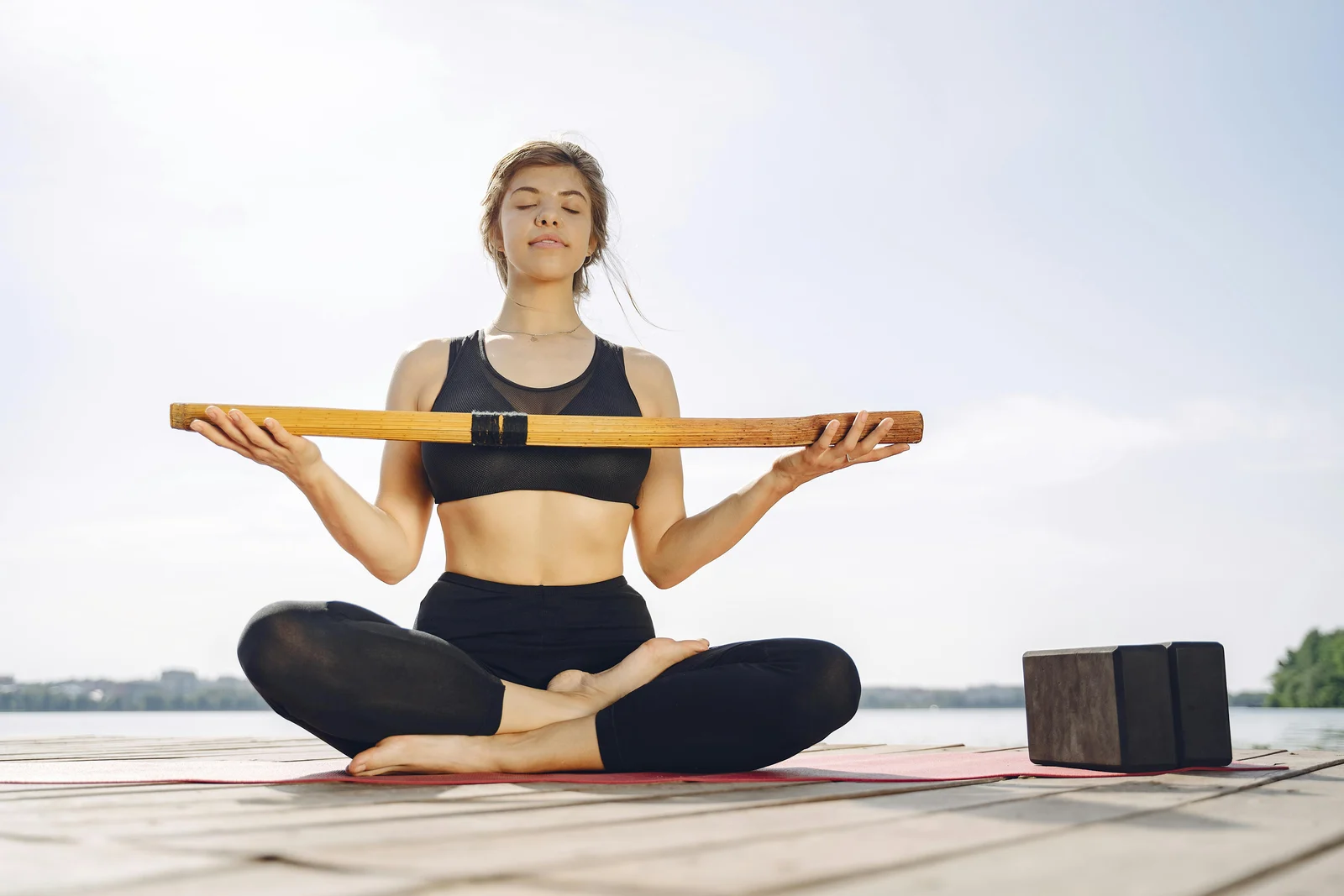
Most beginners have no idea that a yoga block is one of the most powerful and helpful props they'll ever pick up. When I started, props felt like something separate from real yoga, a sign you weren't flexible enough or strong enough yet. I had that feeling too. So let me say it plainly: yoga props for beginners are not a sign you're falling short. The truth is the opposite. The yoga block is there to help you do the pose properly from your very first class, and not knowing that stops more beginners than any tight hamstring ever has.
A prop brings the floor up to you
A yoga block is not a crutch. It's a tool that brings the ground closer so you can do the pose properly instead of straining to reach something your body isn't ready to reach yet.
Think about a standing forward fold, where you hinge at the hips and reach your hands toward the floor. If your hands don't reach, most beginners round their back to get there. The back rounds, the shoulders hunch, and the pose you're actually doing is no longer the pose. Put a yoga block under each hand and the floor is now where your hands already are. Your spine stays long. You get the real shape of the pose, today, in the body you have today.
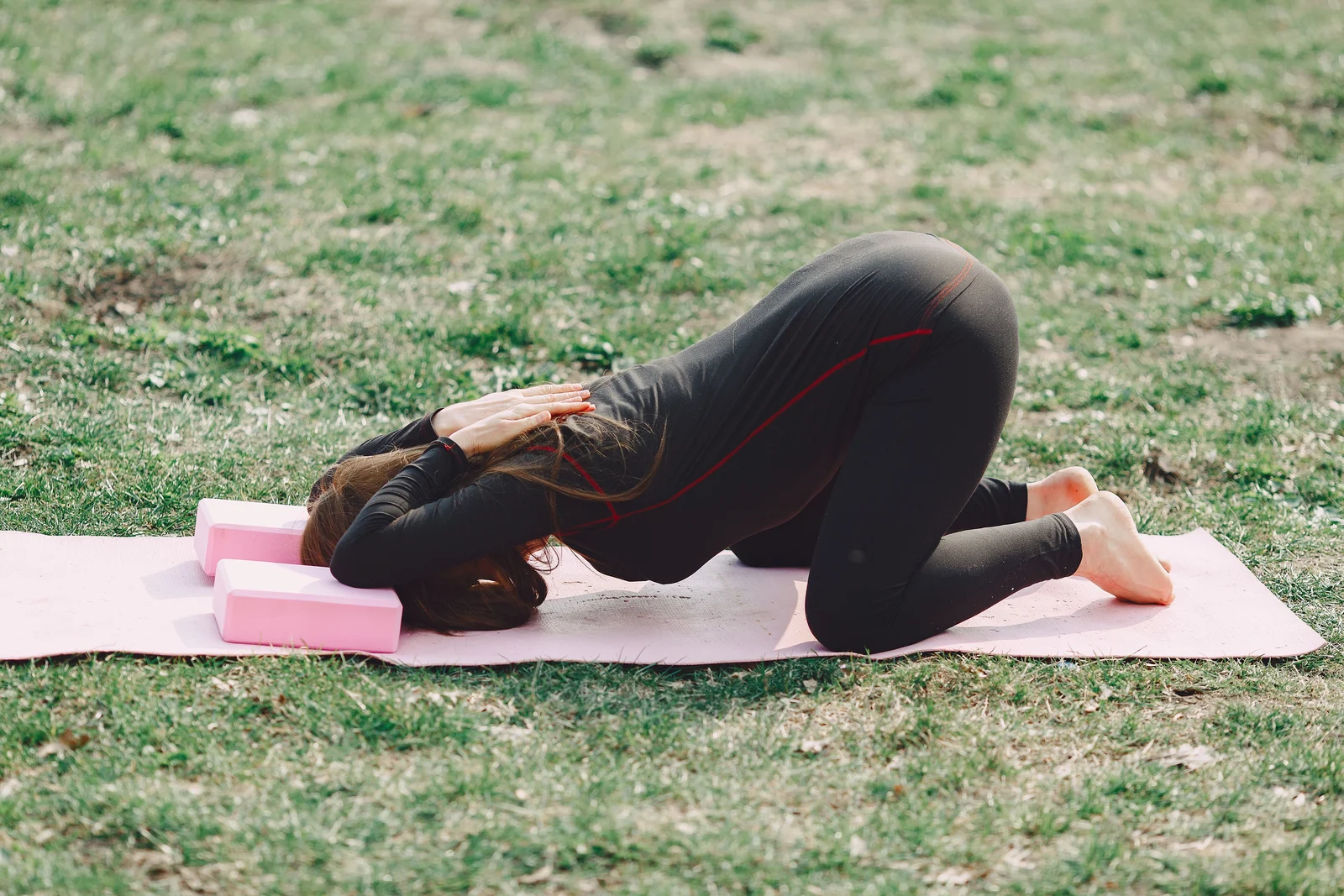
That's the whole idea. The prop doesn't make the pose easier in a cheating way. It makes the pose correct. A practitioner who has done this for years still reaches for a yoga block when the alignment calls for one. It isn't a beginner's badge. It's how careful people protect their own bodies.
The five props you'll meet, and what each one actually does
There are five props you'll run into most. None of them is complicated. This is what each one is for, in plain terms.
The yoga block. A firm foam or cork brick, about the size of a thick book. It raises the floor. Hands in a standing fold, a hand on the ground in a side stretch, or under your hips in a supported pose. Anywhere you're reaching for the ground and not quite getting there, the yoga block meets you partway.
The strap. A flat belt with a buckle. It gives you a longer arm. In a seated forward fold, where you sit with your legs out and reach for your feet, most beginners can't reach without yanking and hunching. Loop the strap around the soles of your feet, hold both ends, and you can sit tall and fold from the hips instead of hauling on your spine.
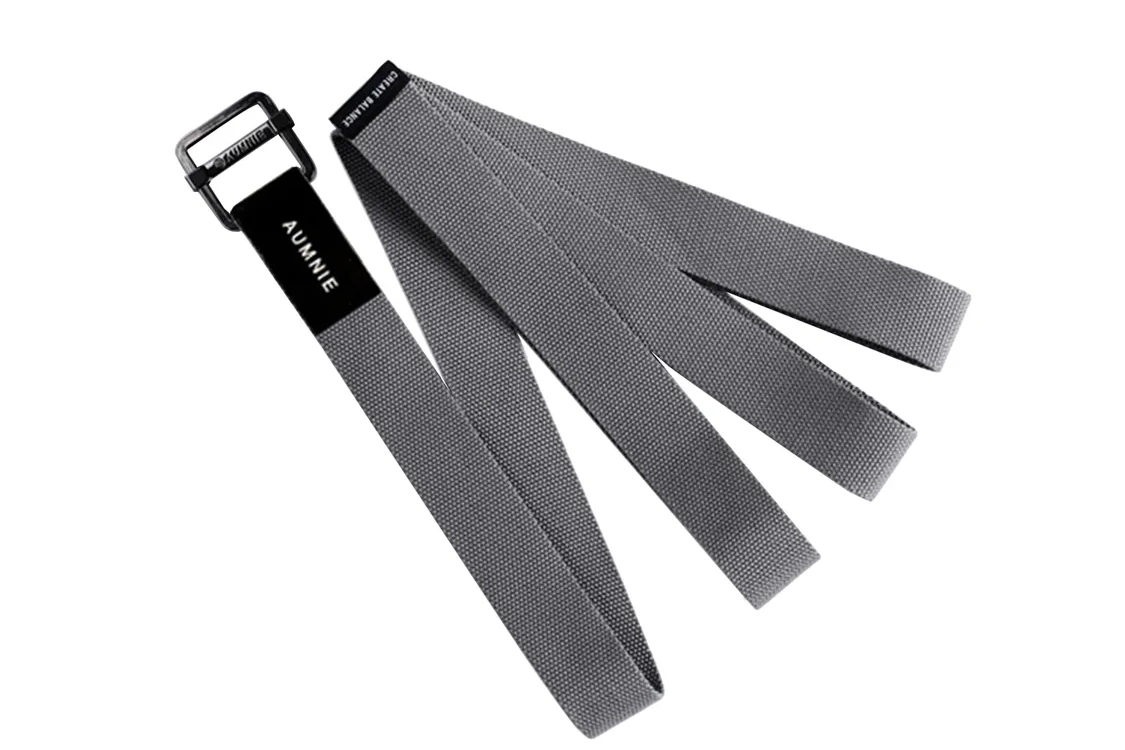 Shop AUMNIE
The bolster. A long firm cushion. It holds you up so your body can let go. Lie back over it to open the chest, or tuck it under your knees in the final resting pose so your lower back settles. The bolster does the holding so your muscles don't have to.
The blanket. A folded blanket lifts your hips in seated poses so your knees drop and your back stops fighting to stay upright. It also pads your knees in kneeling poses and keeps you warm when you lie still at the end. The plainest prop, and one of the most useful.
The yoga chair. A sturdy backless chair, or any solid chair you trust. It brings a whole pose up to a height your body can reach. Sit in it for poses your knees aren't ready for on the floor, hold the back of it for balance in a standing pose, or fold over the seat to take the load off your spine. A main prop in its own right, not a last resort.
Can you do yoga at home with props you already own?
Yes, you can. Most of my students practise live from home, not a studio, and almost none of them bought anything to start. You already own a prop, you just haven't called it that yet. Look around the room you're in and you'll find a few. So I want this part clear: you do not need to buy a thing to begin.
A wall is a prop. Stand with your back to it to feel what a straight spine actually feels like, or rest a hand on it for balance in a standing pose so you can focus on the rest of your body instead of wobbling. Any sturdy chair from your kitchen or dining table stands in for a yoga chair. Sit in it for poses your knees aren't ready for on the floor, or hold the back of it for support. A stack of two or three books does the job of a yoga block. A bathrobe belt, a long scarf, or a luggage strap does the job of a yoga strap. A firm cushion or a couch pillow stands in for a bolster.
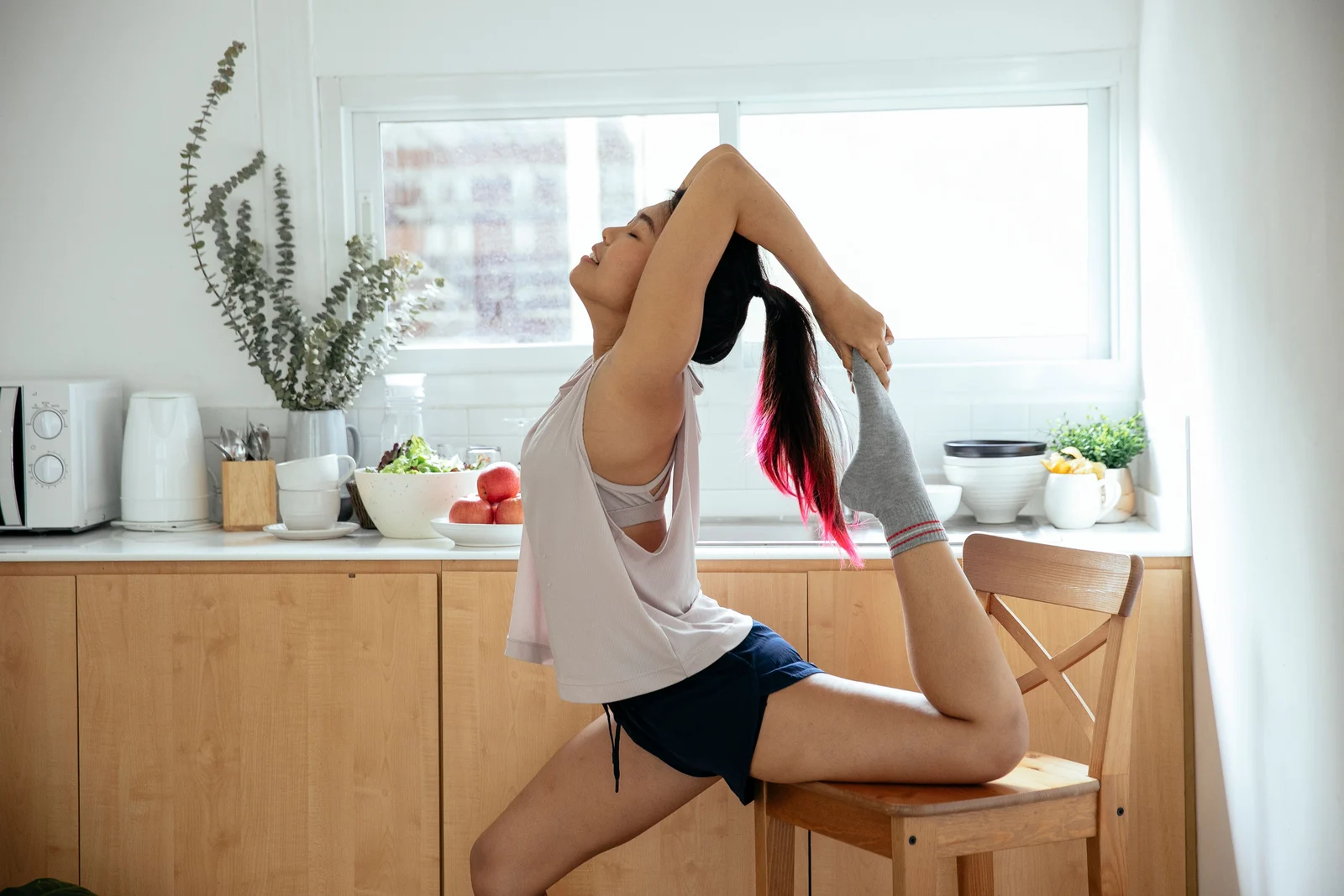
Start with what's in your house. If you keep practising and want the real versions later, a yoga block and a strap are cheap and they last for years. But none of it is the price of entry. The price of entry is you, on the floor, willing to try.
Why I'd rather you used a yoga block than strained without one
When a beginner strains to reach without a prop, the same thing happens every time. The shoulders climb, the jaw tightens, and the breath stops. I watch for it the way I watch for held breath in a hard pose, and when I see it I'll say the same thing I always say: focus on breathing. A prop is the physical version of that cue. It takes the strain out so the breath can keep going and the body can settle into the shape instead of fighting it.
I learned to teach this properly during my 200-hour training, where the whole point was safe sequencing and how to actually help someone brand new. Helping someone brand new often means handing them a yoga block before they hurt themselves chasing a pose with bad form. Ego says reach further. Your spine says use the yoga block. I'm on the side of your spine.
There's one thing I really want beginners to hear. The goal is to properly align your body to each pose. It is not to stretch your muscles as far as they'll go, and it is not to look good in the pose. With the help of these props, your body stays properly aligned and comfortable in each pose, and you avoid straining your muscles or joints, or worse, getting injured. There's no prize for doing a pose the hard way with your back rounded and your breath held. The prize is the pose done well, breath moving, body safe. If a yoga block or a strap is what gets you there, pick it up. That's not you falling short of yoga. That's you doing it the way I'd teach you in person.
If you ever want to try a class with me, I teach mostly online from Da Nang and my students join live on Zoom from all over. No experience needed, and no special equipment either. Bring a yoga block if you have one, or a stack of books if you don't. I'll guide you through everything, props and all.