
Why breathing matters in yoga more than the pose does
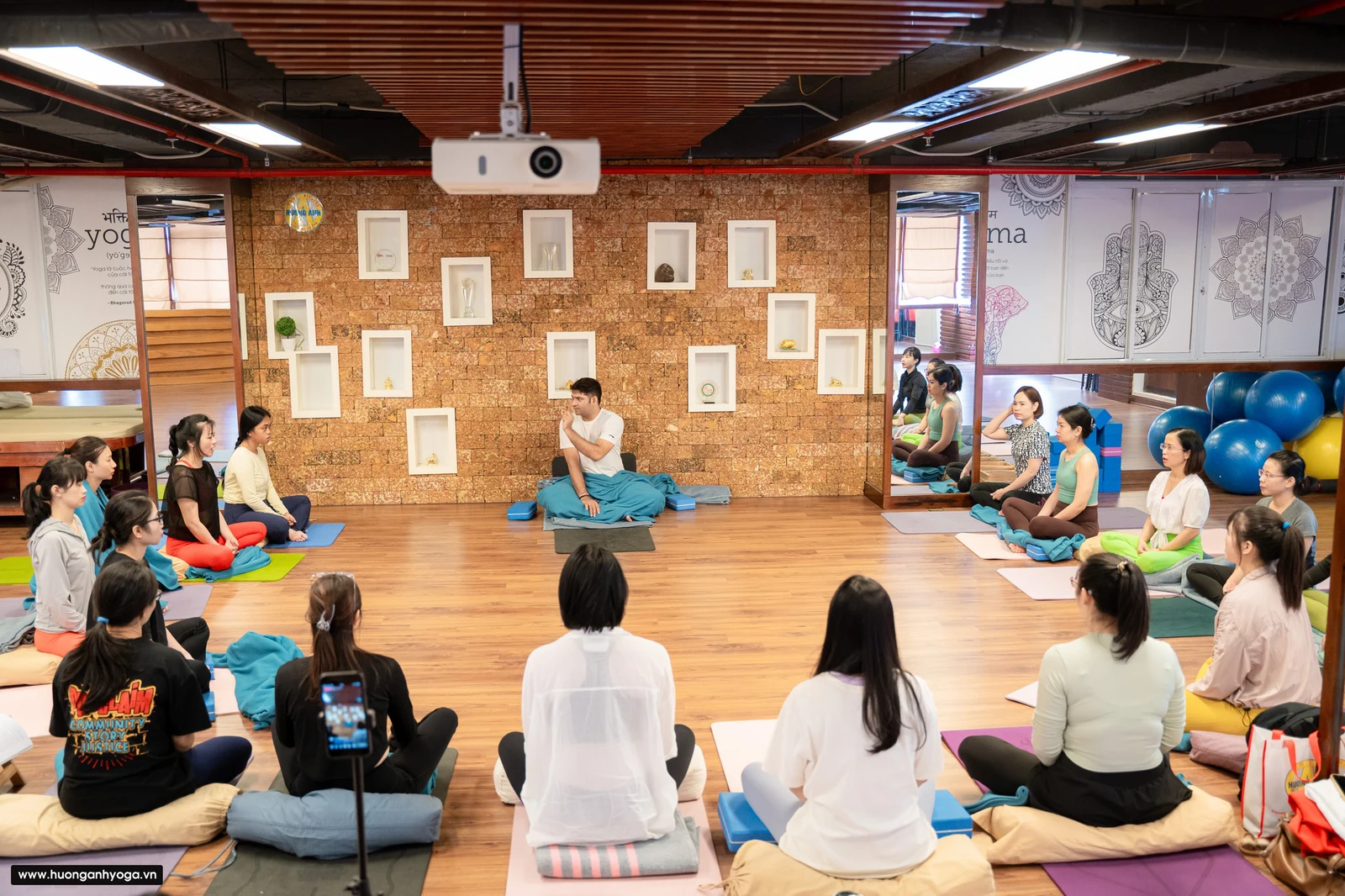
I get asked this almost every week. A new student joins one of my Zoom classes, sits on the mat, and after a few sessions asks why I keep going on about the breathing when the poses are the obvious work. It's a fair question. The poses are what yoga looks like from the outside. But the breath is what yoga actually is. The poses are mostly scaffolding the breath hangs on.
What I tell every new student
The first time someone shows up to my class, I do not start with poses. I ask them to close their mouth, breathe in through the nose, and notice the feeling of the air going in.
That's it. One slow breath in. One slow breath out. Nothing fancy.
I do this because almost every new student arrives with shallow chest breathing they've never thought about. They aren't breathing badly. They are just breathing the way most people breathe when they're sitting at a desk or scrolling a phone. Yoga asks for something different. It asks the breath to slow down and reach deeper into the lungs, and that only happens when you stop and pay attention to it for a minute.
If you skip this part and go straight into poses, the breath stays shallow the whole class. You leave feeling like you did a stretching workout. You did not really do yoga.
Why nose breathing feels strange at first
A lot of beginners tell me nose breathing is uncomfortable. They feel like they can't get enough air. They want to open their mouth and gulp.
This is normal. Nasal breathing is slower than mouth breathing, on purpose. The nose narrows the air path, which forces the breath to take its time. If you have spent years breathing through your mouth without noticing, the slower rhythm feels wrong at first. It is not wrong. It is just new.
The other thing happening is that you're starting to notice the diaphragm, which is the muscle just below your lungs that pulls air in. When you breathe through the nose slowly, the diaphragm has time to work properly. The ribcage expands sideways. The belly moves a little. You can feel it if you put a hand on your stomach during a slow inhale.
Most people have never paid attention to any of this. That's the part that feels strange, not the breathing itself. Give it a few classes.
How do you breathe during yoga?
You breathe in slowly through your nose and out slowly through your nose, in time with the pose you're in. Most new students rush the inhale and forget to exhale, or they hold the breath altogether when the pose gets uncomfortable, and the whole class ends up feeling tighter than it needs to be.
On Zoom I can usually tell within the first five minutes who is matching the breath to my voice and who is chasing the movement. The students who let the breath set the pace look calmer on the screen. They are not better at yoga. They are listening to their own body first.
What holding your breath does to a pose
Almost every beginner does this without realizing. You move into a pose that's a little hard, your body tenses, and you stop breathing. Sometimes for two seconds. Sometimes for the whole pose.
You won't notice you're doing it. I have to point it out to students, and even then, they often have to wait for the next hard pose to catch themselves at it.
Holding your breath during a difficult pose makes the pose harder, not easier. Your shoulders climb up toward your ears. Your jaw clenches. The muscle you're trying to stretch braces against you. You end up fighting the pose instead of settling into it.
When I notice a student bracing, I just say "focus on breathing." That's the whole instruction. The pose almost always softens on the next exhale. Not because the student suddenly got more flexible, but because they let the body do what it was already capable of.
Something to try in your next class
If you take one thing from this, take this. In your next class, before the teacher starts the warm-up, sit with your mouth closed and take five slow breaths in and out through your nose. Count them. Do not try to make the breaths big or deep. Just notice them.
Then, during the class, when you hit a pose that feels hard, check whether you're still breathing. If you aren't, exhale. You don't need a fancy technique. You just need to keep the breath going.
That's most of what good breathing in yoga looks like at the beginner level. Slow nasal breath when you can. An exhale when you catch yourself braced. The rest comes with time.
I tell new students all of this in their first class because I'd rather you understand the point of the breathing on day one than spend six months wondering why the teacher keeps mentioning it.
If you ever want to try a class with me, I teach mostly online from Da Nang. My students join live on Zoom from all over. The Philippines, Vietnam, Dubai, the Netherlands, South Africa, the UK, Australia, and more. If you are in Da Nang, I'll come to your house for in-person sessions. I'm also open to travelling for companies or studios that want me to teach for a few days. No experience needed. I'll guide you through everything, including the breath.